
 For two decades, the game was simple: Stuff your pages with keywords, buy a few sketchy backlinks, and pray to the Google gods for a spot on page one.
If you made it to the top ten, you were winning. If you hit the top three, you were printing money. But it’s April 2026, and the old rulebook hasn’t just been updated: it’s been tossed into the furnace.
If you’re still obsessing over “meta descriptions” and “keyword density” while ignoring the rise of AI-driven answer engines, you aren’t just behind the curve. You’re invisible. The traditional search engine is dying, and the Answer Engine has taken its place.
At BLKHustle, we’ve always been about the real blueprint, not the fluff. Whether you’re an Operator scaling a retail brand or a Builder just getting your feet wet, you need to understand how people find information today. It’s no longer about getting a click; it’s about becoming the definitive answer.
The 2026 Shift: Why Google Isn’t the Only Player Anymore
For years, Google was the sun that every business revolved around. Today, the solar system has expanded. 80% of consumers now rely on zero-click results in at least 40% of their searches.

Think about that. Nearly half the time, people aren’t even visiting a website. They’re getting the answer directly from an AI Overview, a Perplexity summary, or a ChatGPT response. This shift has triggered a 15-25% drop in organic web traffic across the board.

The monopoly is over. We are seeing search fragmented across:
- Conversational AI: ChatGPT, Claude, and Gemini are the new front doors for complex queries.
- Vertical Search: People are going straight to TikTok for visual reviews or Amazon for products, bypassing traditional search entirely.
- AI Overviews (SGE): Even when people stay on Google, they are reading the AI-generated summary at the top and leaving.
If your strategy relies on someone clicking a blue link to read a 500-word blog post, you’re fighting a losing battle. You have to disrupt your own thinking. The goal is no longer just traffic: it’s presence. You need to be the source that the AI cites when it answers a user’s question.
From Search Engine to Answer Engine: How LLMs Pull Data
Traditional SEO was about indexing. You’d make sure a crawler could see your site, and it would rank you based on popularity and relevance.
Modern Answer Engine Optimization (AEO) is about ingestion. Large Language Models (LLMs) don’t just “look” at your site; they consume the data to build a world model. They are looking for entities, not just words.
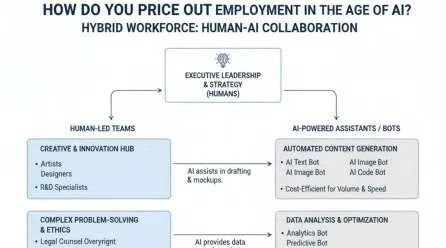
When a user asks, “What are the best strategies to recession-proof a Black-owned business?” the AI isn’t just looking for those exact words. It’s looking for:
- Semantic Depth: Does this content explain the why and the how?
- Entity Authority: Is this brand recognized as a leader in business education?
- Reliability: Is the data current and cited?
Here is the scary part: Fewer than 10% of the sources cited by AI engines actually rank in the top 10 of Google’s organic results.
The AI doesn’t care about your backlink count if your content is thin. It wants the most comprehensive, authoritative answer available. This is why we focus so heavily on Market Intelligence in The Briefcase. We aren’t just chasing keywords; we are building a body of work that makes it impossible for an AI to ignore us.
Content Over Keywords: Why Authority and ‘Vibe’ Matter More Than Ever
In the old days, you could “trick” a search engine. You could optimize for a keyword you didn’t really have authority on. In 2026, the AI can smell the cap from a mile away.
Authority and “Vibe” (Brand Sentiment) are the new SEO.
The AI is looking for what Google calls E-E-A-T: Experience, Expertise, Authoritativeness, and Trustworthiness. But for our community, there’s an extra layer: Cultural Relevance. If your brand doesn’t resonate with the lived experience of your target audience, the AI will pick up on the lack of engagement and deprioritize you.

Stop writing for bots and start writing for legacy.
- Experience: Don’t just say “here is how to start a business.” Say “here is how I started my boutique with $500 and a dream.” Use real stories.
- Expertise: Deep-dive into the technical stuff. If you’re talking about supply chains, talk about the specific tariffs hitting urban centers.
- Authoritativeness: Get mentioned in other authoritative spaces. Being a guest on the BLKHustle Spotlight series does more for your “entity authority” than 1,000 low-quality backlinks.
Your “vibe”: the way people talk about you on social media, in forums, and in reviews: is now a ranking signal. If the “cultural conversation” around your brand is positive, the AI will treat you as a trusted entity.
Future-Proofing: How to Stay Visible When AI Answers the Question
So, how do you dominate in a world where the AI is the middleman? You have to future-proof your hustle. You can’t stop the technology, but you can position yourself to benefit from it.
1. Optimize for the “Answer”
Structure your content to be easily digestible for LLMs. Use clear headings, bullet points, and FAQ sections. When you provide a direct, clear answer to a common question, you increase the chances of being featured in a “Zero-Click” result.
2. Build Your “Entity”
Don’t just be a website; be a brand. Ensure your business information is consistent across all platforms: LinkedIn, Instagram, Google Business Profile, and industry directories. The more “nodes” the AI can connect to your brand, the more it trusts you as an authority.
3. Focus on High-Intent, Long-Tail Content
Generic keywords like “marketing tips” are being swallowed by AI. Focus on specific, high-intent queries that require human perspective. Instead of “how to save money,” write about recession-proofing a specific type of business in a specific economy.
4. Direct Community Engagement
If people are going directly to your site or your app, you don’t have to worry about a middleman. Build your email list. Grow your community. Make your content so valuable that people bookmark it. The ultimate SEO is a customer who types your URL directly into the browser.

The Bottom Line: Adapt or Evaporate
Traditional SEO isn’t “dead” in the sense that it’s gone, but it is dead as a standalone strategy. It has evolved into a broader game of Digital Presence and Authority.
The 2026 landscape is about movement. It’s about building a brand that the AI has to cite because you are the most relevant, most trusted, and most culturally aligned source in your niche.
At BLKHustle, we aren’t just watching these shifts; we’re leading them. We are breaking barriers and redefining what it means to build in public. Don’t let the change intimidate you. Use it as a lever.
Your Challenge: Take one piece of content you wrote last year. Rewrite it not for keywords, but for authority. Add your personal story, add hard data, and structure it to answer a specific question.
The era of AI search is here. Own your space, or someone else: or some thing else: will.
Want more tactical breakdowns of how to navigate the 2026 economy? Subscribe to The Briefcase Podcast and join the movement of entrepreneurs building for the future.


